









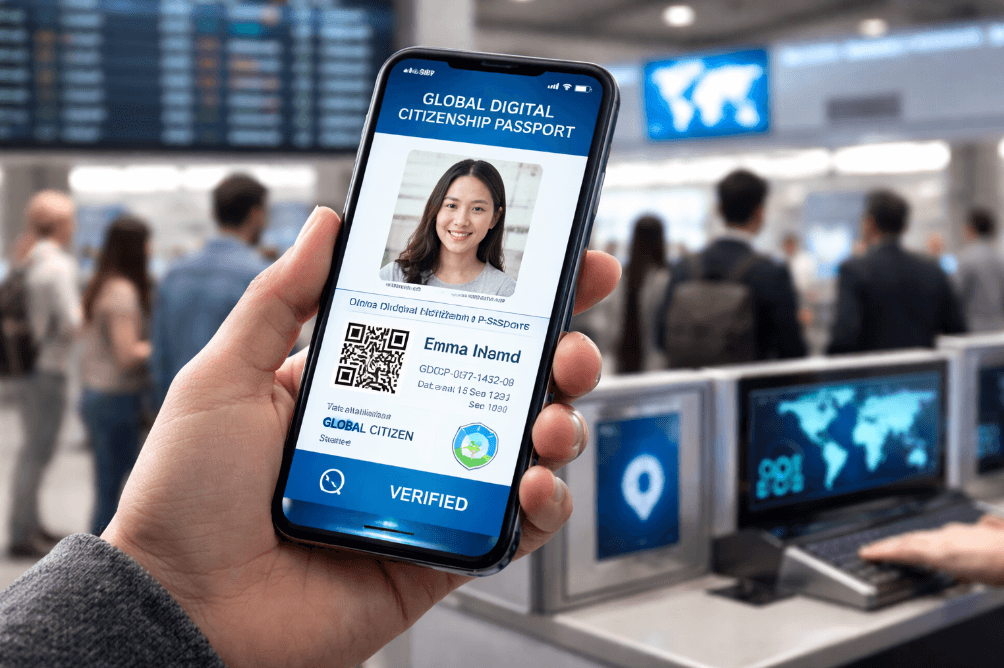
In an era defined by rapid globalization, digital transformation, and remote connectivity, the concept of citizenship itself is evolving. By 2027, a new and potentially transformative idea is emerging across global policy discussions: the Global Digital Citizenship Passport. Unlike traditional passports tied to geography and nationality, this proposed system envisions a secure, decentralized digital identity recognized across borders.
This innovation could fundamentally alter how people travel, work, access services, and participate in the global economy. While still in conceptual and pilot phases across various tech ecosystems, the idea is gaining traction as governments, international organizations, and private technology leaders explore secure digital identity infrastructures.
The Problem with Traditional Identity Systems
Current identity frameworks are nation-bound. A passport or national ID defines an individual’s access to mobility, banking, healthcare, and legal systems. However, globalization has created millions of cross-border workers, digital nomads, remote employees, refugees, and stateless individuals who fall through bureaucratic gaps.
Traditional documentation also faces challenges such as:
- Lengthy visa processing delays
- Fraudulent identity risks
- Inconsistent verification standards
- Limited portability across digital platforms
- Exclusion of undocumented populations
As more economic and social activity moves online, a secure digital identity framework becomes increasingly essential.
What Is the Global Digital Citizenship Passport?
The Global Digital Citizenship Passport (GDCP) is envisioned as a blockchain-backed, encrypted digital identity credential accessible via secure mobile devices. It would not replace national citizenship but supplement it, creating a universal layer of verified identity recognized across participating countries and institutions.
Core features may include:
- Biometric authentication
- Decentralized blockchain verification
- Cross-border credential recognition
- Portable work and education certifications
- Secure digital signature capabilities
This identity would exist independently of geography while maintaining compliance with international law and sovereignty frameworks.
Technology Powering the System
At the heart of the GDCP concept lies decentralized identity (DID) architecture. Instead of storing identity data in centralized government databases vulnerable to breaches, information would be encrypted and distributed across secure nodes.
Technologies likely to power the system include:
- Blockchain for immutable record validation
- Zero-knowledge proofs for privacy-preserving verification
- AI-powered biometric scanning
- Quantum-resistant encryption standards
- Cloud-edge hybrid infrastructure
Individuals would control access to their credentials, granting permission only when needed.
How It Could Transform Global Travel
One of the most visible impacts would be on international travel. Instead of multiple visa stamps and paperwork, travelers could use encrypted QR-based verification systems linked to their digital passport.
Airports could implement seamless verification checkpoints, reducing waiting times and enhancing security accuracy. Border authorities would instantly validate credentials without manual inspection.
Additionally, emergency travel authorizations could be processed digitally within hours instead of weeks.
Revolutionizing the Global Workforce
The global workforce is increasingly remote. Freelancers in Asia work for companies in Europe, while digital entrepreneurs serve global markets without physical offices. The GDCP could simplify:
- International hiring verification
- Cross-border tax compliance tracking
- Credential authentication
- Portable social security frameworks
This would enable frictionless workforce mobility and potentially create a unified digital labor ecosystem.
Financial Inclusion and Banking Access
Over a billion people worldwide lack formal banking access due to insufficient identity documentation. A global digital passport could provide verified credentials enabling access to:
- International digital wallets
- Cross-border payment systems
- Microfinance programs
- Insurance platforms
Secure identity verification would reduce fraud while increasing inclusion.
Supporting Refugees and Stateless Individuals
Perhaps one of the most humanitarian applications lies in supporting displaced populations. Refugees often lose documentation, leaving them unable to access services or employment.
A decentralized digital identity system stored securely in the cloud could preserve credentials regardless of physical displacement. Education records, health history, and professional certifications could remain accessible.
Global Governance and International Cooperation
For such a system to succeed, international collaboration is essential. Participating nations would need to agree on interoperability standards, privacy protections, and data sovereignty frameworks.
Multilateral agreements could establish guidelines ensuring digital citizenship complements national laws without undermining sovereignty.
Privacy and Ethical Considerations
Any universal identity system raises significant privacy concerns. Safeguards would need to include:
- Explicit user consent protocols
- Strict data minimization principles
- Transparent algorithmic auditing
- Independent oversight authorities
Without robust ethical governance, public trust could erode quickly.
Economic Implications
The GDCP could stimulate new industries, including digital identity infrastructure, cybersecurity services, compliance auditing, and biometric device manufacturing. Governments could reduce administrative costs while increasing tax compliance accuracy.
Digital identity ecosystems may become foundational pillars of the global digital economy.
Challenges to Implementation
Despite its promise, several challenges remain:
- Geopolitical tensions limiting cooperation
- Digital divide in developing regions
- Cybersecurity threats
- Legal harmonization complexities
- Public skepticism toward surveillance risks
Overcoming these obstacles requires transparent communication and gradual pilot programs.
Education and Awareness
Public literacy about digital identity systems will be critical. Governments and NGOs must educate citizens about rights, security measures, and control over personal data.
The Role of the Private Sector
Major technology firms are likely to contribute infrastructure and cybersecurity solutions. Collaboration between governments and private innovators could accelerate development while maintaining regulatory oversight.
Future Outlook: 2030 and Beyond
By 2030, digital identity frameworks may become as commonplace as email addresses. The Global Digital Citizenship Passport could integrate with:
- Digital voting platforms
- International healthcare networks
- Climate migration frameworks
- Cross-border education systems
It may eventually redefine the meaning of citizenship itself — from a purely territorial concept to a hybrid digital-global identity.
Social and Cultural Transformation
Beyond governance and economics, a global digital passport could foster a stronger sense of planetary identity. Younger generations already view themselves as global citizens connected through digital platforms.
This system could reinforce collaboration across borders while preserving cultural diversity.
Conclusion
The Global Digital Citizenship Passport 2027 represents one of the most ambitious ideas of the digital age. If implemented ethically and inclusively, it could enhance mobility, security, inclusion, and economic opportunity worldwide.
However, success depends on international cooperation, technological resilience, and unwavering commitment to human rights protections.
The world is entering a new chapter of identity — one that may no longer be defined solely by borders, but by secure digital belonging.
Would you accept a Global Digital Citizenship Passport? The debate is just beginning.