





Strait of Hormuz: Strategic Chokepoint Shaping Global Energy, Security, and Geopolitics
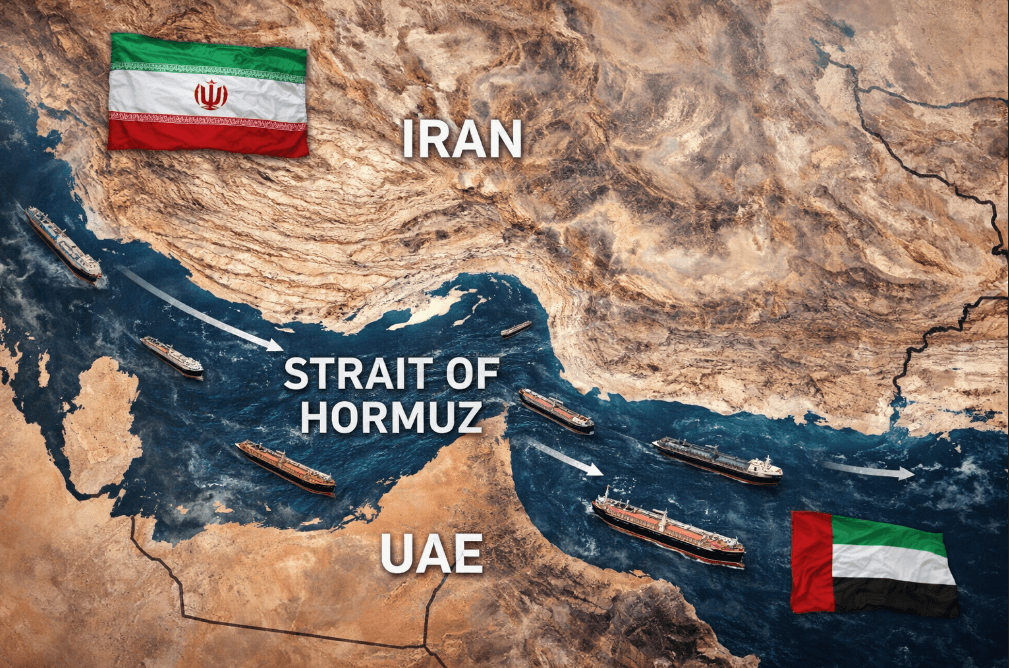
The :contentReference[oaicite:0]{index=0} stands as one of the most strategically important waterways in the world. Though geographically narrow, it carries immense economic and geopolitical weight. This critical maritime passage connects the Persian Gulf to the Gulf of Oman and the Arabian Sea, serving as the primary export route for oil and liquefied natural gas from some of the world’s largest energy producers.
Roughly one-fifth of global petroleum consumption passes through this corridor, making it indispensable to global energy markets. Any disruption here can ripple across international economies, influence oil prices, and heighten geopolitical tensions.
Geographical Overview
The Strait of Hormuz lies between :contentReference[oaicite:1]{index=1} to the north and :contentReference[oaicite:2]{index=2} and the :contentReference[oaicite:3]{index=3} to the south. At its narrowest point, the strait measures approximately 21 nautical miles wide. However, designated shipping lanes are even narrower, only about two miles wide in each direction.
This narrowness makes navigation highly sensitive. Tankers carrying millions of barrels of oil must carefully follow internationally recognized traffic separation schemes to avoid collision and ensure safety.
Historical Significance
For centuries, the Strait of Hormuz has been a vital trade artery. Ancient maritime routes linking the Indian subcontinent, East Africa, and the Middle East passed through these waters. Control over this passage has historically been a strategic objective for empires and regional powers.
In the modern era, its significance dramatically increased with the discovery and commercial exploitation of oil in the Gulf region during the 20th century. As Gulf nations became major exporters, the strait evolved into one of the world’s most important energy chokepoints.
Energy Lifeline of the World
The Strait of Hormuz serves as the primary export route for oil producers including Saudi Arabia, Iraq, Kuwait, the UAE, and Iran. Millions of barrels of crude oil and petroleum products transit daily through this corridor.
In addition to oil, the strait is crucial for liquefied natural gas shipments, particularly from Qatar. Major energy-importing countries in Asia — including China, India, Japan, and South Korea — depend heavily on uninterrupted passage through Hormuz.
Any disruption, even temporary, can cause sharp spikes in global oil prices, impact inflation rates, and strain international supply chains.
Military and Strategic Importance
The narrow geography of the strait makes it highly vulnerable in times of conflict. Naval forces from regional states and global powers maintain a significant presence in and around these waters.
The United States Fifth Fleet, based in Bahrain, routinely patrols the region to ensure maritime security. Meanwhile, Iran maintains coastal defense systems and naval capabilities that allow it to influence shipping traffic.
Military exercises, naval deployments, and periodic confrontations have underscored the delicate security balance in the area.
Geopolitical Tensions
Tensions involving Iran and Western nations have periodically raised fears of potential blockades or disruptions. Iranian officials have, at times, warned that sanctions or hostile actions could lead to closure of the strait, though such a move would have severe global consequences.
Regional rivalries, including those involving Gulf Arab states, also contribute to strategic calculations around Hormuz. The strait often becomes a focal point during broader Middle East crises.
Legal Framework and International Law
The Strait of Hormuz falls under the framework of the United Nations Convention on the Law of the Sea (UNCLOS), which provides for transit passage through international straits used for navigation.
This means that ships and aircraft enjoy the right of continuous and expeditious transit, though coastal states retain certain regulatory rights for safety and environmental protection.
Legal interpretations, however, sometimes differ, especially amid geopolitical disputes.
Economic Implications of Disruption
Even minor incidents in the Strait of Hormuz can create significant economic ripple effects. Insurance premiums for shipping vessels may rise, oil prices can surge, and global stock markets often react swiftly to news of instability.
Energy-importing nations often develop contingency plans, including strategic petroleum reserves, to mitigate potential supply shocks.
Alternative Routes and Energy Diversification
Some Gulf countries have invested in alternative pipelines to bypass the strait partially. For example, the UAE operates a pipeline that allows oil exports directly to the Arabian Sea, reducing reliance on Hormuz.
However, these alternatives cannot fully replace the massive volume transported through the strait. As a result, diversification efforts remain supplementary rather than substitutive.
Environmental Concerns
The concentration of oil tankers increases the risk of spills, collisions, and environmental degradation. The Gulf ecosystem is particularly sensitive, with limited water circulation that can prolong pollution impacts.
Environmental protection measures and maritime safety standards are critical to preventing ecological damage.
Technological Surveillance and Security
Advanced radar systems, satellite monitoring, and maritime tracking technologies are used extensively to ensure safe passage. Both regional governments and international coalitions monitor vessel movements closely.
Cybersecurity has also emerged as a modern concern, as digital navigation systems and port infrastructure could be targeted during conflicts.
Future Outlook
The Strait of Hormuz will likely remain strategically vital for decades to come. While global energy transitions toward renewables are accelerating, oil and gas will continue to play significant roles in the global energy mix in the near to medium term.
Geopolitical dynamics in the Middle East, global power competition, and regional security frameworks will shape the stability of this waterway.
Efforts toward diplomatic engagement, multilateral security cooperation, and economic diversification may reduce tensions over time. However, given its centrality to global trade, the Strait of Hormuz will remain one of the most closely watched maritime corridors in the world.
Conclusion
The Strait of Hormuz is far more than a narrow stretch of water. It is a lifeline for global energy markets, a flashpoint for geopolitical tensions, and a symbol of the interconnected nature of modern economies.
As long as oil remains a critical component of global industry and transportation, this maritime chokepoint will continue to command international attention. Stability in the Strait of Hormuz is not merely a regional issue — it is a matter of global economic security.