






The Escalating Red Sea Shipping Crisis and Its Global Economic Impact
An in-depth 2026 analysis of maritime security, geopolitics, and global trade disruption
Introduction
The Red Sea shipping crisis has emerged as one of the most significant global disruptions to international trade in recent years. What began as regional instability has evolved into a complex geopolitical confrontation affecting supply chains, energy markets, insurance costs, and diplomatic relations across continents.
The strategic importance of the :contentReference[oaicite:0]{index=0} cannot be overstated. Connecting the Mediterranean Sea to the Indian Ocean through the :contentReference[oaicite:1]{index=1}, this maritime corridor carries nearly 12–15% of global trade and a substantial portion of the world’s oil and liquefied natural gas shipments.
Since late 2023 and continuing into 2026, escalating attacks on commercial vessels, regional military responses, and heightened geopolitical tensions have turned this vital waterway into a flashpoint of international concern.
Origins of the Crisis
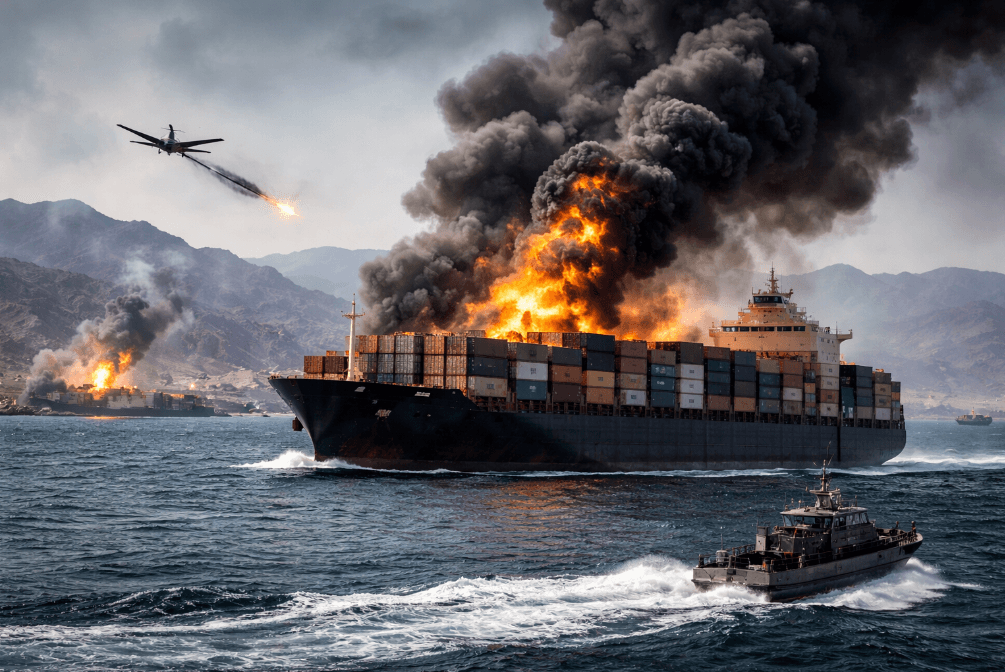
The roots of the crisis lie in the broader conflict dynamics of the Middle East, particularly the prolonged instability in :contentReference[oaicite:2]{index=2}. Armed groups operating from Yemeni territory, most notably the :contentReference[oaicite:3]{index=3}, began targeting commercial vessels transiting the Red Sea.
These attacks included:
- Missile strikes against cargo ships
- Drone assaults on oil tankers
- Hijacking attempts
- Threats against vessels linked to specific countries
The stated motivations varied — from solidarity with regional allies to political leverage in broader Middle Eastern conflicts. However, the economic consequences rapidly expanded far beyond the region.
Strategic Importance of the Red Sea Corridor
The Red Sea is not merely a regional route; it is a lifeline of globalization. Each year, thousands of vessels carrying consumer goods, raw materials, electronics, automobiles, and energy supplies pass through this narrow corridor.
Key economic facts include:
- A major portion of Europe-Asia trade passes through this route.
- Energy exports from the Gulf depend heavily on uninterrupted transit.
- Shipping time between Asia and Europe is reduced by nearly two weeks compared to alternative routes.
When vessels are forced to reroute around the Cape of Good Hope in southern Africa, costs rise dramatically due to:
- Higher fuel consumption
- Longer transit times
- Increased insurance premiums
- Supply chain delays
By 2026, many shipping companies had partially diverted routes, causing congestion and volatility in global freight rates.
Military Responses and Escalation
The maritime attacks prompted international naval coalitions to intervene. The :contentReference[oaicite:4]{index=4} deployed additional warships to escort commercial vessels and intercept incoming threats. European nations coordinated patrols under security operations supported by the :contentReference[oaicite:5]{index=5}.
Despite defensive measures, the risk environment remained unstable. Missile interceptions and drone neutralizations became frequent occurrences, transforming the Red Sea into a militarized zone.
The possibility of direct confrontation between regional powers increased fears of broader escalation. Analysts warned that miscalculation or accidental strikes could widen the conflict.
Impact on Global Trade and Inflation
The most immediate consequence of the crisis has been economic. Shipping companies imposed “war risk surcharges,” raising transportation costs. These expenses eventually translated into higher consumer prices.
Industries affected include:
- Automotive manufacturing
- Electronics and semiconductors
- Energy and fuel markets
- Retail and e-commerce sectors
Countries heavily reliant on maritime imports — including :contentReference[oaicite:6]{index=6} and various European economies — experienced delays in raw materials and intermediate goods.
Global inflation pressures, already sensitive due to post-pandemic recovery and geopolitical tensions, faced renewed strain. Financial markets reacted with volatility whenever new attacks were reported.
Energy Security Concerns
Energy shipments are particularly vulnerable. Oil tankers and liquefied natural gas carriers frequently transit the Red Sea en route to Europe and Asia.
Although total supply disruptions have been avoided, the risk premium on oil prices increased during periods of intensified attacks. Energy-importing nations feared potential supply bottlenecks.
Major energy producers such as :contentReference[oaicite:7]{index=7} monitored the situation closely, balancing export commitments with regional security realities.
China, Europe, and Global Supply Chains
The Red Sea crisis also affected major manufacturing hubs and trade powers. :contentReference[oaicite:8]{index=8}, as one of the world’s largest exporters, relies heavily on maritime routes to access European markets.
Extended shipping times disrupted just-in-time manufacturing systems. Ports across Europe reported fluctuations in container arrivals, complicating logistics planning.
Insurance markets in London and Asia recalibrated maritime risk assessments, raising premiums for vessels operating in high-threat zones.
Diplomatic Efforts and the Role of the United Nations
The international community, including the :contentReference[oaicite:9]{index=9}, called for de-escalation and diplomatic dialogue. Maritime security forums emphasized the importance of protecting civilian shipping lanes under international law.
However, diplomatic solutions remain complex. The crisis intersects with broader regional rivalries, proxy conflicts, and unresolved political disputes.
Humanitarian and Environmental Risks
Beyond economics, the crisis carries humanitarian and environmental dangers. A successful strike on a major oil tanker could cause catastrophic ecological damage to fragile marine ecosystems.
Furthermore, humanitarian shipments passing through the region face uncertainty. Aid deliveries to vulnerable populations in parts of Africa and the Middle East risk delays due to rerouted vessels.
Long-Term Strategic Consequences
The prolonged instability has triggered structural reconsiderations in global trade:
- Diversification of shipping routes
- Investment in regional manufacturing hubs
- Expansion of overland trade corridors
- Increased defense spending for maritime security
Some analysts argue that the crisis may accelerate the reshaping of globalization, pushing companies to reduce dependence on single chokepoints.
Expert Analysis
Security experts describe the Red Sea crisis as a “hybrid conflict zone,” where non-state actors, regional rivalries, and global powers intersect.
Economic analysts warn that sustained instability could:
- Slow global GDP growth
- Increase long-term shipping costs
- Reshape supply chain geography
- Deepen geopolitical polarization
Yet, some experts remain cautiously optimistic that coordinated naval patrols and diplomatic pressure could stabilize the situation.
What Happens Next?
As of 2026, the Red Sea remains under heightened surveillance. Naval escorts continue, commercial shipping adapts, and geopolitical negotiations unfold behind closed doors.
The future depends on multiple variables:
- Regional conflict developments
- Diplomatic breakthroughs
- Maritime defense effectiveness
- Global economic resilience
If tensions subside, shipping routes could normalize, easing inflation and stabilizing trade flows. If escalation continues, the world may face prolonged disruption.
Conclusion
The Red Sea shipping crisis illustrates how interconnected the modern world has become. A regional conflict can ripple outward, influencing global prices, political alliances, and economic stability.
Protecting international waterways is not merely a military issue — it is a global economic necessity. The events unfolding in this critical corridor serve as a reminder that maritime security underpins modern civilization.
As governments, corporations, and international organizations navigate this complex challenge, the outcome will shape trade patterns and geopolitical dynamics for years to come.