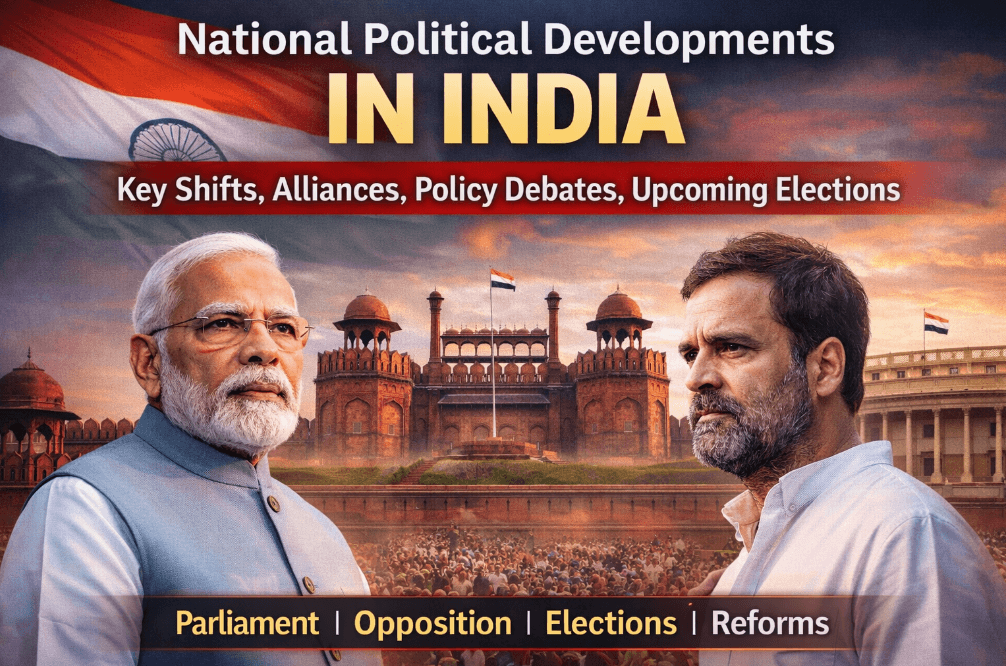







The India political landscape 2026 is entering a decisive phase marked by shifting alliances, evolving voter expectations, economic pressures, and regional recalibrations. As the country moves closer to the next general election cycle, political parties are restructuring their strategies to secure dominance in an increasingly competitive environment. From coalition arithmetic to leadership narratives, from regional party resurgence to youth-driven political discourse, the electoral battlefield is becoming more complex than ever.
This comprehensive Indian politics analysis explores party strategies, governance performance, voter behavior trends, regional alignments, and the broader electoral impact shaping the road to 2026. Understanding these dynamics is crucial not only for political observers but also for citizens, investors, and policy stakeholders monitoring India’s democratic direction.
Background: Evolution of Indian Politics in the Last Decade
Over the past decade, Indian politics has undergone structural transformation. National elections have increasingly revolved around strong leadership narratives, centralized campaign strategies, and data-driven outreach. At the same time, regional identities and state-level power structures have continued to influence electoral outcomes.
The rise of digital campaigning, direct benefit transfer schemes, welfare politics, and targeted messaging has reshaped voter engagement. Political communication is no longer confined to rallies and television debates; it now operates through social media ecosystems, grassroots mobilization apps, and hyper-local networks.
This shift has intensified competition. Parties must now balance ideological positioning with practical governance delivery, particularly in areas such as employment, inflation management, infrastructure development, and social welfare.
Current Political Alignment Ahead of 2026
The India political landscape 2026 is defined by three major pillars:
- National ruling coalition strategy
- Opposition bloc consolidation attempts
- Regional party negotiation power
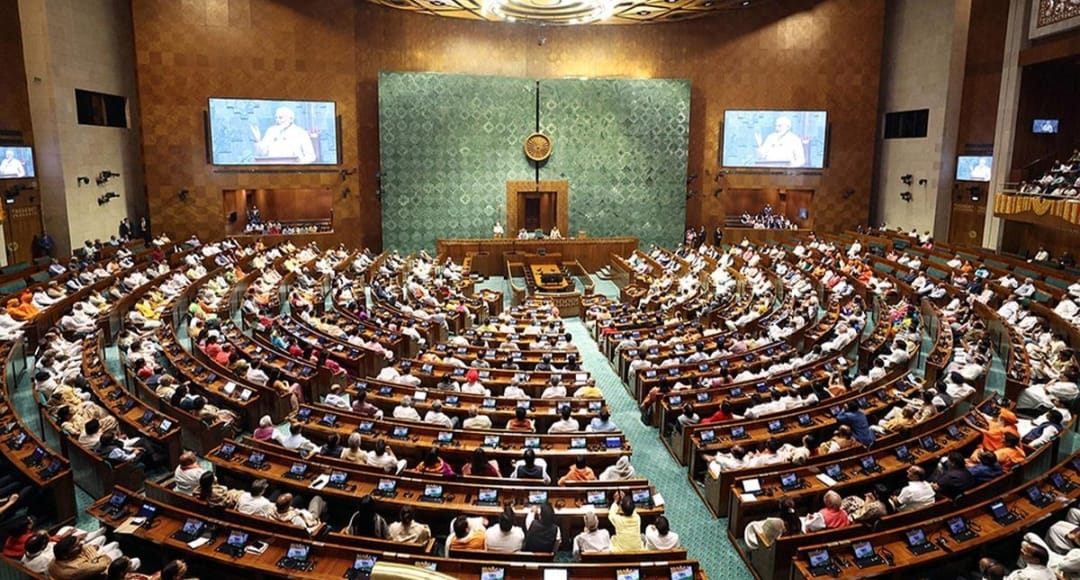
The ruling alliance focuses on governance continuity, infrastructure achievements, welfare expansion, and national security messaging. Its strategy emphasizes stability, long-term development projects, and centralized leadership authority.
Meanwhile, opposition groups are attempting coordination to prevent vote fragmentation. Their approach involves seat-sharing arrangements, regional strength pooling, and issue-based campaigns centered on unemployment, inflation, and federal balance.
Regional parties remain critical players. In several states, their performance determines parliamentary seat distribution. Their negotiation leverage increases in closely contested states, particularly where margins of victory are narrow.
Key Electoral Issues Shaping 2026
1. Employment and Youth Aspirations
India’s large youth population continues to prioritize employment generation and skill development. Political narratives increasingly address startup ecosystems, digital economy growth, and industrial expansion. Youth voters are also more exposed to online political debates, making perception management crucial.
2. Inflation and Cost of Living
Price stability remains a politically sensitive issue. Any sustained rise in essential commodity prices could influence swing voters in both urban and semi-urban constituencies.
3. Welfare Delivery and Social Schemes
Direct cash transfers, healthcare coverage, rural housing schemes, and agricultural support policies remain central campaign themes. Parties highlight measurable outcomes and beneficiary outreach statistics to reinforce credibility.
4. Federal Relations
State governments and the central government relationship plays a crucial role. Federal autonomy debates may shape alliances and campaign messaging in opposition-led states.

Regional Political Equations
The India political landscape 2026 cannot be analyzed without examining regional dynamics. States such as Uttar Pradesh, Maharashtra, West Bengal, Tamil Nadu, Bihar, and Karnataka carry significant parliamentary weight.
North India
Northern states often determine national momentum. Caste alignments, rural welfare penetration, and agricultural policy outcomes influence voter behavior here.
South India
Southern states present a more diverse political map. Regional parties are strong, and local governance records often outweigh national narratives. Language identity and state autonomy debates also shape electoral strategy.
Eastern India
Eastern states show increasing political competition. Development promises, industrial investments, and welfare penetration will play decisive roles.
Western India
Economically influential western states focus heavily on infrastructure growth, urban development, and industrial expansion narratives.
Leadership Narratives and Campaign Messaging
Modern Indian elections are leader-centric. Political branding, public communication style, and national visibility significantly influence voting decisions.
Campaign messaging strategies include:
- Mass rallies and direct outreach
- Targeted social media campaigns
- Micro-level constituency data analysis
- Influencer and grassroots volunteer mobilization
Leadership image consistency remains critical. Voters evaluate credibility based on governance track record, crisis management capability, and policy clarity.
Role of Technology in the 2026 General Election India Scenario
Technology is reshaping electoral management. Data analytics platforms track voter segmentation patterns. Campaign apps coordinate volunteers and monitor booth-level turnout. Digital advertising allows hyper-local messaging with demographic precision.
The 2026 general election India environment is expected to witness intensified digital outreach, particularly targeting first-time voters. However, regulatory oversight of misinformation and political advertising transparency may also increase.
Coalition Mathematics and Seat Sharing
Coalition politics remains central to the India political landscape 2026. Seat-sharing formulas require delicate balancing of regional dominance, historical performance, and ideological compatibility.
Challenges in coalition formation include:
- Leadership projection conflicts
- Vote transfer efficiency concerns
- Local cadre resistance
- Ideological contradictions
Successful coalitions depend on disciplined coordination and unified messaging.
Urban vs Rural Voting Patterns
Urban voters often prioritize infrastructure, job creation, digital services, and economic stability. Rural voters may focus more on agriculture support, welfare delivery, rural employment programs, and price stability.
Bridging these different expectations requires balanced policy narratives that resonate across demographic groups.
Economic Performance and Political Impact
Economic growth trajectory significantly influences electoral outcomes. GDP performance, manufacturing output, export trends, and fiscal discipline become major talking points during campaigns.
The electoral impact of economic indicators depends not only on macro data but also on ground-level perception. If economic benefits are felt across social groups, ruling parties gain credibility. If inequality concerns rise, opposition narratives strengthen.
Media Influence and Public Opinion Formation
Traditional media remains influential, but digital platforms dominate opinion formation among younger demographics. Real-time news cycles accelerate narrative shifts. A single event can rapidly reshape political discourse.
Political parties therefore invest heavily in rapid response teams, media coordination units, and digital monitoring cells to manage perception and crisis communication.
Challenges Facing Political Parties in 2026
- Maintaining internal unity
- Preventing voter fatigue
- Managing alliance disagreements
- Addressing economic concerns
- Handling misinformation risks
The ability to adapt quickly may determine electoral success.
Possible Electoral Scenarios
Scenario 1: Clear Majority for Ruling Coalition
This would indicate voter preference for continuity and stability.
Scenario 2: Strong Opposition Consolidation
This scenario would reflect effective alliance management and issue-based mobilization.
Scenario 3: Fragmented Mandate
A fractured verdict would elevate regional parties’ negotiation power.
What Happens Next in the India Political Landscape 2026
As election campaigns intensify, policy announcements, alliance shifts, and candidate selections will shape momentum. Public debates on governance performance versus change narratives will dominate discourse.
The India political landscape 2026 represents more than an electoral contest; it reflects evolving democratic maturity, institutional strength, and citizen expectations.
Frequently Asked Questions
What is the main issue in the 2026 general election India?
Employment, inflation, welfare delivery, and federal balance are expected to be key issues.
How important are regional parties?
Regional parties hold decisive influence in closely contested states and coalition arithmetic.
Does economic growth impact election results?
Yes, especially when growth translates into visible benefits for citizens.
Will youth voters influence outcomes?
First-time voters and digitally active youth populations may significantly impact urban constituencies.
Conclusion
The India political landscape 2026 is shaped by strategic recalibrations, alliance negotiations, economic performance, and demographic transitions. Electoral success will depend on a combination of governance credibility, coalition discipline, persuasive leadership narratives, and effective voter outreach. As India approaches another democratic milestone, the political strategies adopted today will determine the balance of power for years to come.