









Harvesting Air Water 2026: The Nobel-Level Innovation Solving Global Water Scarcity
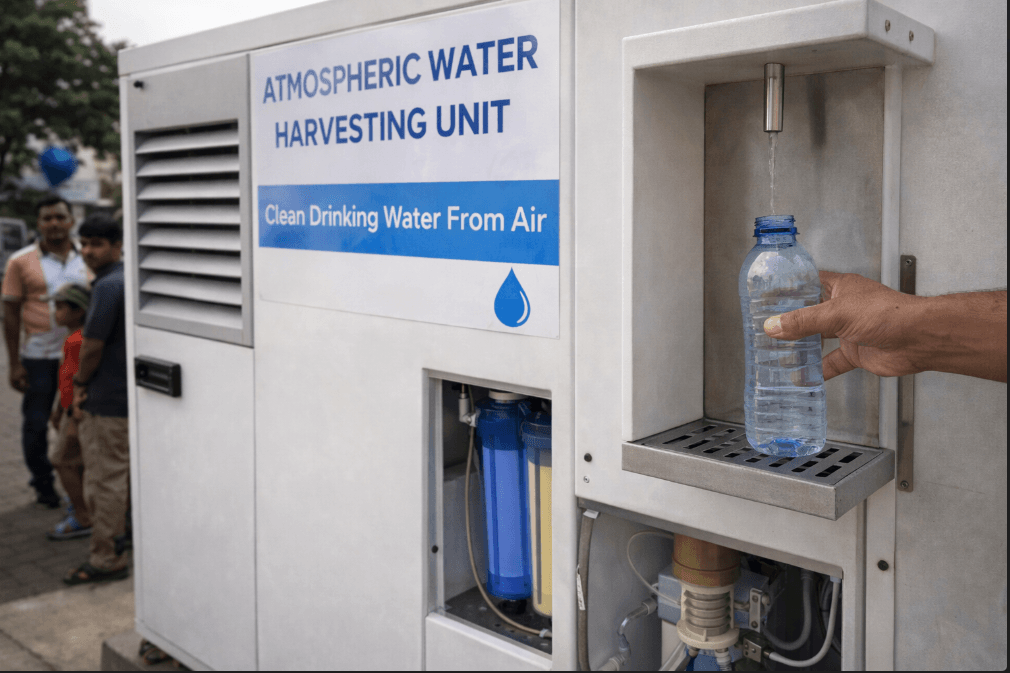
In a world where billions struggle for access to clean water, a revolutionary breakthrough technology in 2026 is offering a powerful new solution: the ability to extract potable water directly from the air. This concept — often referred to as Harvesting Air Water 2026 — combines advanced materials science, energy-efficient systems, and scalable designs to provide sustainable water in areas plagued by drought, infrastructure failures, or climate disruption.
Originally inspired by decades of research into atmospheric moisture and hygroscopic materials, the latest innovations have brought this technology into real-world feasibility. Nobel laureate Prof. Omar Yaghi’s recent work on high-performance water-harvesting units demonstrates how cutting-edge chemistry can directly address global water insecurity. :contentReference[oaicite:0]{index=0}
Why Global Water Scarcity Demands Innovation
Water scarcity is no longer a localized problem — it is a pressing global challenge. Climate change intensifies droughts and heat waves, shifting rainfall patterns and straining traditional water supplies. According to global environmental assessments, billions lack reliable access to potable water, and millions face increasing threats to food security and sanitation. :contentReference[oaicite:1]{index=1}
Areas such as the Caribbean islands, parts of Africa, and arid regions in Asia are especially vulnerable. Conventional solutions like desalination, well drilling, or pipeline extensions often fail due to high costs, environmental impact, or logistical constraints.
How Air Water Harvesting Works
The core principle behind air water harvesting is simple: the atmosphere holds vast amounts of moisture — even in seemingly dry climates. Advanced materials known as metal-organic frameworks (MOFs) can capture water molecules from air with exceptional efficiency. Once trapped, heat or sunlight can release the moisture into liquid form, creating drinkable water.
- Atmospheric moisture capture materials
- Passive or low-energy regeneration processes
- Collection and filtration systems
- Clean storage and distribution infrastructure
The efficiency of the latest units means that modest installations — comparable in size to shipping containers — can produce up to 1,000 liters of water per day using ultra-low grade thermal energy. :contentReference[oaicite:2]{index=2}
Real-World Applications and Impact
This breakthrough technology is not just theoretical. Several pilot programs are underway worldwide, targeting communities where traditional water sources have become unreliable. Examples include:
- Remote island communities with rising sea levels
- Desert fringe cities experiencing chronic drought
- Disaster zones with damaged infrastructure
- Military and emergency response operations
For humanitarian organizations, portable air water harvesting units offer an invaluable resource, providing safe water without need for electrical grids or pipelines.
Climate Resilience and Sustainability
Air water harvesting aligns closely with sustainability goals because it leverages renewable energy and atmospheric resources. Unlike desalination, which produces saline waste, atmospheric harvesting yields clean, fresh water with minimal environmental footprint.
Moreover, the decentralized nature of these systems enhances community resilience, especially in regions where climate change has disrupted traditional water cycles. Decentralized water production means less dependence on fragile centralized utilities.
Scientific Foundations and Innovations
The science behind harvesting air water relies on breakthroughs in porous materials and nanotechnology. Metal-organic frameworks — crystalline compounds with huge internal surface areas — can trap water molecules efficiently even in low-humidity environments. Recent breakthroughs have improved their performance and lowered production costs.
Researchers have also developed hybrid systems that combine solar thermal energy with advanced condensation mechanisms, enabling water capture even with fluctuating temperatures.
Scaling for Global Deployment
One of the biggest challenges for any emerging technology is scalability. For air water harvesting, scaling involves:
- Mass production of advanced hygroscopic materials
- Integration with renewable energy sources
- Development of modular and transportable units
- Local partnerships for distribution and maintenance
Several companies and research labs are now working on commercial versions of these systems, with prototypes already deployed in pilot regions.
Economic Benefits and Job Creation
Harvesting air water 2026 is not just an environmental solution — it has economic potential. As production scales up, new industries and job opportunities are emerging:
- Manufacturing of atmospheric water harvesting units
- Installation and maintenance services
- Training and education programs
- Local micro-enterprises providing water services
In regions where conventional water infrastructure is lacking, these technologies can stimulate local economies while addressing essential needs.
Policy and International Cooperation
Governments and international organizations play a crucial role in promoting global deployment of air water harvesting technologies. Policies that support research funding, regulatory frameworks, and public-private partnerships can accelerate adoption.
International forums such as the World Economic Forum and UN climate negotiations can integrate air water harvesting into broader strategies for sustainable development. Aligning this technology with global water goals can multiply its impact.
Challenges and Considerations
Despite their promise, air water harvesting systems face obstacles before they become widespread:
- High initial investment costs
- Need for skilled technicians
- Variability in atmospheric conditions
- Integration with local water governance
Addressing these challenges requires collaborative solutions involving governments, private sector innovators, and community stakeholders.
Future Outlook: Beyond 2026
As research continues and production scales, air water harvesting could become a standard tool in the global water portfolio by 2030. Emerging variations of these systems may enhance efficiency further and reduce costs, making them accessible even to low-income communities.
Experts predict that combining air water harvesting with other sustainable technologies — such as solar desalination and smart irrigation — could create resilient water ecosystems in vulnerable regions.
Social and Cultural Impact
Beyond technical and economic effects, the availability of water from air could influence social dynamics. Access to reliable water sources can reduce migration pressures, improve health outcomes, and strengthen community cohesion.
In countries where water scarcity fuels conflict, innovative solutions like air water harvesting offer hope for peace and stability.
Education and Community Engagement
Education programs that teach communities about sustainable water practices and technology maintenance can empower residents to manage their resources effectively. Initiatives that combine technology deployment with water literacy have a higher chance of long-term success.
Private Sector and Innovation Ecosystem
Venture capital and global investors are increasingly looking toward climate tech solutions that address water scarcity. Air water harvesting startups are now attracting attention, with funding rounds focused on scaling, international deployment, and hybrid innovations.
Global Health Implications
Access to clean water is fundamental to global health. The ability to generate water from the atmosphere could reduce waterborne diseases and improve sanitation in underserved regions. Health agencies and NGOs are exploring how these systems can support emergency medical operations.
Conclusion
The emergence of air water harvesting technology in 2026 represents a paradigm shift in the battle against water scarcity. With the potential to deliver clean water from the air itself, this innovation brings hope to millions around the world.
By combining scientific ingenuity, economic opportunity, and global cooperation, harvesting water from air may transform how humanity secures one of its most essential resources.
Could this be the technology that finally solves global water scarcity? Share your thoughts below.