





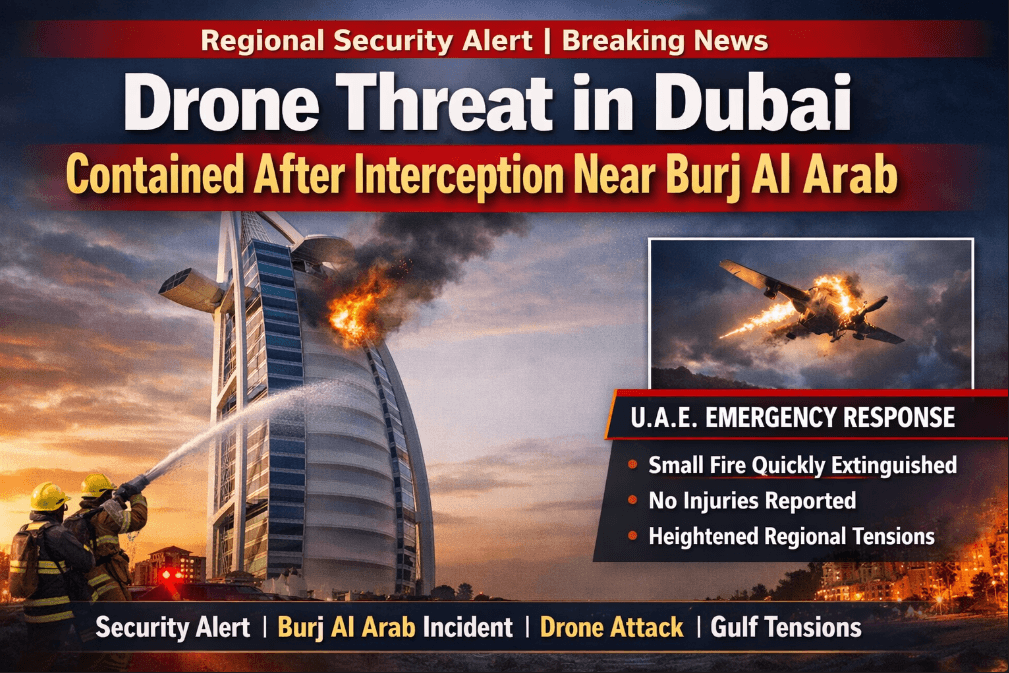
Drone Threat in Dubai Contained After Interception Near Burj Al Arab
Date: March 1, 2026
Dubai witnessed a moment of heightened alert after a drone was intercepted above the city near the world-famous Burj Al Arab hotel. The interception resulted in falling debris that caused a minor fire on part of the structure’s outer façade. Emergency teams responded immediately, bringing the situation under control within minutes. Authorities confirmed that no injuries were reported.
While the physical damage was minimal, the symbolic significance of the incident drew international attention. Dubai, widely recognized for its stability and world-class infrastructure, rarely experiences such direct aerial security incidents. The swift response by civil defense and security authorities helped prevent escalation and reassured residents and visitors alike.
What Happened
According to official briefings, air defense systems detected an incoming drone approaching Dubai’s protected airspace. The drone was successfully intercepted before it could reach its intended trajectory. Debris from the neutralized device fell onto part of the Burj Al Arab’s exterior, igniting a small fire that was rapidly extinguished by emergency responders.
Authorities immediately secured the surrounding area and conducted safety checks throughout the hotel premises. Guests were informed and precautionary measures were briefly implemented before operations resumed normally.
Rapid Emergency Response
Dubai Civil Defence teams arrived within minutes of the incident. Fire crews quickly assessed the damage and extinguished flames before they could spread. Medical teams were on standby, though fortunately no injuries were reported among hotel guests, staff, or emergency personnel.
Officials praised the efficiency of the response system, noting that preparedness drills and advanced surveillance technology played key roles in minimizing potential harm.
Why the Location Matters
The Burj Al Arab is one of the most recognizable landmarks in the Middle East. Built on an artificial island off Dubai’s coastline, the luxury hotel has long symbolized the city’s economic success and global prominence. Any incident involving such a landmark inevitably generates international headlines.
Security experts emphasize that high-profile structures often represent symbolic targets during periods of regional tension. However, they also highlight that Dubai maintains one of the most sophisticated urban security infrastructures in the region.
Regional Context
The incident occurred during a period of increased geopolitical tension across parts of the Middle East. Several Gulf states have heightened defensive postures amid broader regional instability. Drone and missile technologies have become increasingly prevalent in modern conflicts, raising new security challenges for densely populated urban centers.
Although authorities have not publicly confirmed the drone’s origin, investigations are ongoing. Analysts suggest that advanced detection systems and coordinated military readiness were instrumental in preventing a more serious outcome.
Impact on Residents and Tourists
Dubai’s residents and millions of annual visitors rely on the city’s reputation for safety. Initial reports of the interception triggered concern on social media, but official confirmation that the situation was under control helped calm public sentiment.
Tourism officials reassured travelers that hotel operations and city infrastructure remain fully functional. The Burj Al Arab continued welcoming guests shortly after safety inspections were completed.
Aviation and Infrastructure Considerations
Dubai is home to one of the busiest international airports in the world. Authorities confirmed that flight operations were not significantly disrupted by the incident. Airspace monitoring systems remain active around critical infrastructure zones to prevent similar occurrences.
The event underscores the importance of integrating civil aviation security with national defense strategies, especially in regions experiencing heightened tensions.
Security Preparedness in the UAE
The United Arab Emirates has invested heavily in advanced surveillance, radar tracking systems, and interceptor technologies. Urban emergency response teams are trained to handle scenarios ranging from fire outbreaks to aerial threats.
Officials reiterated that public safety remains the highest priority and urged residents to rely on verified updates rather than speculation.
Global Implications
Drone warfare and aerial threats have transformed the nature of modern security. Incidents involving drones near major urban landmarks highlight how technology can bypass traditional defensive barriers if not adequately monitored.
International security analysts point to the growing need for multinational cooperation in intelligence sharing and airspace monitoring. Major cities worldwide are reviewing protective strategies to safeguard iconic structures and dense population centers.
Public Reaction
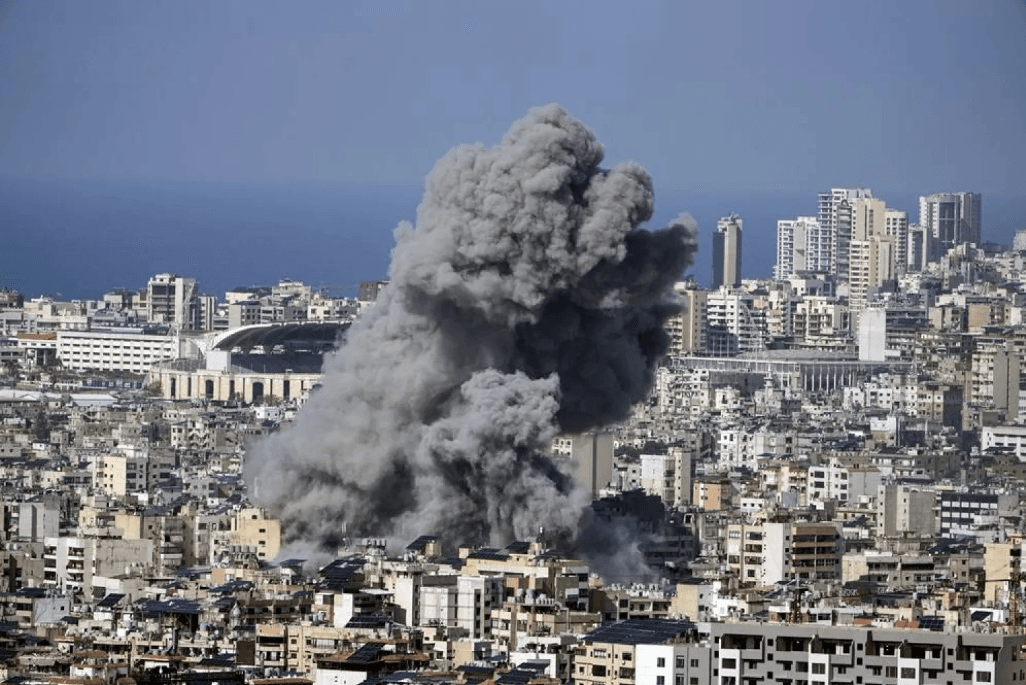
Social media platforms quickly filled with images and videos of smoke near the Burj Al Arab. Many residents expressed gratitude toward emergency teams for their swift response. Others called for stronger regional de-escalation to prevent future threats.
Community leaders emphasized unity and resilience, reinforcing Dubai’s longstanding message of stability and progress despite external challenges.
Economic Outlook
Financial markets in the Gulf region showed mild fluctuations following reports of the incident. However, analysts noted that the limited damage and absence of casualties helped stabilize investor confidence.
Dubai’s diversified economy and strong regulatory frameworks contribute to resilience during periods of geopolitical uncertainty.
Looking Ahead
Authorities continue to investigate the drone’s origin and trajectory. Security agencies are expected to review defensive measures and potentially enhance protective protocols around key landmarks.
Experts predict that urban security strategies across the region will evolve in response to lessons learned from this event.
Conclusion
The drone interception near the Burj Al Arab represents a moment of tension that was effectively managed through rapid defense and emergency response systems. With no injuries reported and minimal structural impact, the city demonstrated preparedness and resilience.
Dubai remains operational, secure, and vigilant. As investigations proceed, officials maintain confidence in the country’s ability to protect its residents, visitors, and globally recognized landmarks.
This remains a developing story. Further updates will be provided as official information becomes available.