






Iran War Live Updates: US Temporarily Lets India Buy Russian Oil Amid Energy Fears; Israeli Military Launches Strikes on Beirut
The ongoing conflict involving Iran, Israel, and the United States has dramatically reshaped geopolitical dynamics across the Middle East and beyond. In a surprising development, the United States has temporarily allowed India to purchase Russian oil despite ongoing sanctions, citing global energy security concerns. At the same time, the Israeli military has intensified its operations by launching airstrikes on Beirut’s southern suburbs, escalating tensions across the region.
The war, which began with escalating military operations between Israel and Iran, has now expanded into a broader regional crisis involving multiple countries. Energy markets have been shaken, global leaders are calling for restraint, and millions of people across the Middle East are facing uncertainty as violence intensifies.
US Allows India to Buy Russian Oil Amid Energy Crisis
One of the most significant developments in the unfolding crisis is the United States’ decision to temporarily allow India to purchase Russian oil. The US Treasury issued a 30-day waiver that permits Indian refiners to buy Russian crude that is currently stranded at sea. This move marks a notable shift in Washington’s policy, as the United States had previously pressured countries to reduce reliance on Russian oil following the Ukraine war.
The decision comes at a time when global energy markets are under intense pressure due to disruptions caused by the escalating conflict in the Middle East. Iran’s strategic position near the Strait of Hormuz—a critical shipping route for global oil exports—has raised fears that energy supplies could be severely affected.
Officials from the US Treasury described the waiver as a short-term emergency measure designed to stabilize global markets. According to American authorities, the policy will not provide significant financial benefits to Russia because it only allows the purchase of oil that is already in transit.
India, the world’s third-largest oil consumer, relies heavily on imports to meet its energy demands. A significant portion of its crude oil passes through the Strait of Hormuz, making the country particularly vulnerable to disruptions caused by the conflict.
Israel Launches Airstrikes on Beirut
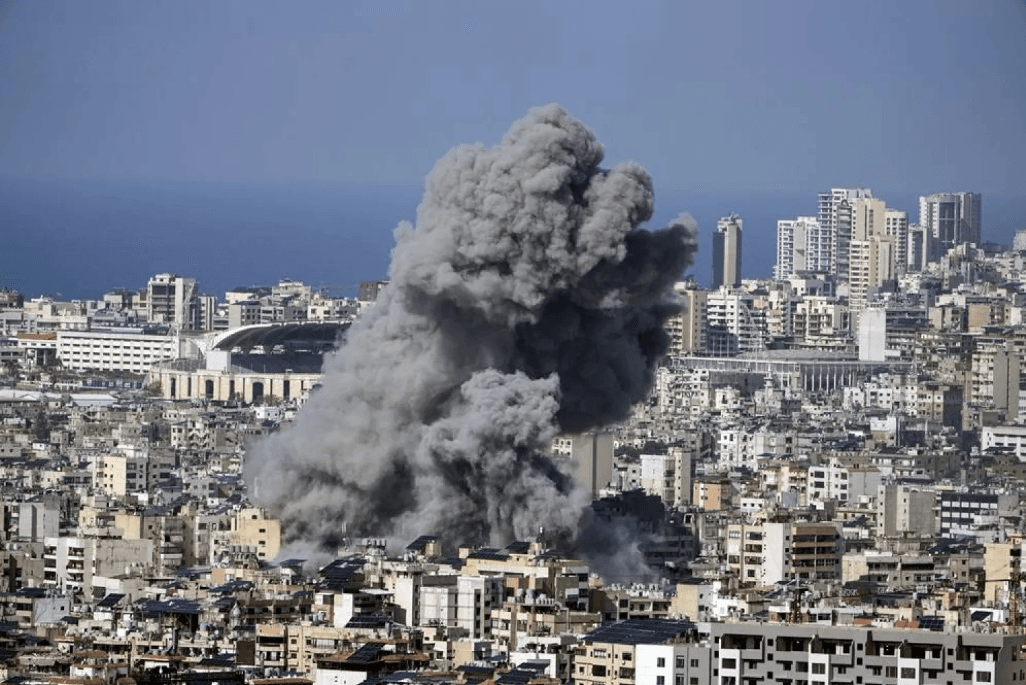
While global energy markets are grappling with the impact of the war, military operations continue to intensify across the Middle East. Israeli forces have launched airstrikes targeting Hezbollah infrastructure in Beirut’s southern suburbs, an area considered a stronghold of the militant group.
The strikes came after Israeli authorities issued evacuation warnings to residents in the densely populated region. The evacuation orders reportedly affected hundreds of thousands of people, causing widespread panic and massive traffic congestion as civilians attempted to flee the area.
According to reports from Lebanese health authorities, dozens of people have been killed and hundreds more injured in the attacks since the escalation began earlier in the week. Buildings were damaged, and thick smoke was seen rising above residential areas following the bombardment.
Israeli officials stated that the strikes were aimed at neutralizing military infrastructure used by Hezbollah. However, critics have expressed concerns about the humanitarian impact of such operations in heavily populated urban areas.
Regional Conflict Expands Beyond Iran
What began as a conflict primarily involving Israel and Iran has rapidly expanded into a broader regional confrontation. Military operations now involve multiple countries and armed groups across the Middle East.
Iran has vowed to respond strongly to any attacks on its territory or allies. Iranian officials have warned that a direct ground invasion by foreign forces could lead to a prolonged and devastating war with unpredictable consequences.
Hezbollah, Iran’s powerful ally in Lebanon, has also stepped up its involvement in the conflict. The group has launched rockets and drones toward Israeli targets near the Lebanon border, further escalating tensions between the two sides.
These developments have raised fears that the conflict could spiral into a full-scale regional war involving numerous states and armed organizations.
Impact on Global Energy Markets
The war’s impact on global energy markets has been immediate and severe. Oil prices surged as investors worried about disruptions to supply routes in the Middle East. The Strait of Hormuz is particularly crucial because it handles a large share of the world’s oil shipments.
Any attempt by Iran to block or disrupt traffic through the strait could trigger a massive spike in global energy prices. This scenario would affect economies worldwide, increasing fuel costs, transportation expenses, and inflation.
Energy analysts say that the US decision to allow India to purchase Russian oil is part of a broader effort to prevent a global energy shock. By ensuring that major importers like India continue to receive adequate supplies, policymakers hope to stabilize markets during the crisis.
India’s Energy Security Concerns
India’s energy security has become a major concern amid the ongoing conflict. The country imports more than 80 percent of its crude oil requirements, making it highly dependent on global supply chains.
Much of India’s oil comes from Middle Eastern producers such as Iraq, Saudi Arabia, and the United Arab Emirates. These shipments pass through the Strait of Hormuz, which has now become a focal point of the geopolitical confrontation.
Indian refiners have reportedly been negotiating with global traders to secure additional crude supplies in case disruptions continue. Russian oil has emerged as a key alternative source due to its availability and competitive pricing.
Experts warn that prolonged instability in the Middle East could force India to diversify its energy sources even further in the coming years.
Humanitarian Crisis in Lebanon
The Israeli strikes on Beirut have triggered a growing humanitarian crisis in Lebanon. Thousands of families have been displaced as residential areas come under bombardment. Emergency services are struggling to cope with the scale of destruction and the number of casualties.
Hospitals in Beirut are reportedly overwhelmed with injured civilians. Aid organizations have called for immediate humanitarian assistance and urged all parties to avoid targeting civilian infrastructure.
International organizations, including the United Nations, have expressed concern about the escalating violence and its impact on ordinary people. Diplomatic efforts are underway to prevent further escalation and to secure humanitarian corridors for civilians.
International Reactions to the Conflict
Governments around the world are closely monitoring the situation as the conflict continues to escalate. Many countries have called for restraint and urged diplomatic solutions to prevent further bloodshed.
European leaders have expressed concern about the expansion of the conflict into Lebanon. Some have warned that a wider regional war could have devastating consequences for global security and economic stability.
Meanwhile, several countries are considering measures to protect their citizens and interests in the region. Some governments have issued travel advisories and begun evacuating nationals from conflict zones.
Role of Global Powers
Major global powers are also playing an increasingly significant role in the unfolding crisis. The United States remains one of Israel’s strongest allies and has provided military and logistical support during the conflict.
At the same time, Russia and China have called for de-escalation and diplomatic dialogue. Both countries have emphasized the need to avoid actions that could worsen the situation or expand the war.
Analysts believe that the involvement of major powers increases both the risks and the opportunities for resolving the conflict. While their participation could escalate tensions, it could also help facilitate negotiations aimed at ending hostilities.
Drone Warfare and Modern Military Technology
The war has also highlighted the growing role of advanced military technology, particularly drones and missile systems. Iran and its allies have used drones extensively in attacks against regional targets, while Israel has deployed advanced air defense systems to intercept incoming threats.
Experts say that modern conflicts are increasingly shaped by technological innovations that allow countries to conduct operations with greater precision and speed.
These technologies also present new challenges for global security, as they can be deployed by both state and non-state actors.
Economic Consequences Worldwide
The economic consequences of the war extend far beyond the Middle East. Global stock markets have experienced volatility as investors react to rising geopolitical risks.
Higher oil prices could drive inflation in many countries, increasing the cost of transportation, manufacturing, and everyday goods. Governments around the world are closely watching the situation and preparing contingency plans to mitigate economic disruptions.
Some economists warn that prolonged instability could slow global economic growth and worsen financial pressures in developing countries.
Future Outlook of the Conflict
The future trajectory of the conflict remains uncertain. Military operations continue across multiple fronts, and diplomatic efforts have yet to produce a breakthrough.
Some analysts believe the conflict could continue for months if political leaders fail to reach a negotiated settlement. Others warn that further escalation could draw additional countries into the war, making the situation even more dangerous.
The coming weeks will likely be critical in determining whether the crisis moves toward de-escalation or expands into a broader regional war.
Conclusion
The ongoing war involving Iran, Israel, and the United States has become one of the most significant geopolitical crises in recent years. The US decision to temporarily allow India to purchase Russian oil underscores the global economic impact of the conflict, while Israeli airstrikes in Beirut highlight the growing humanitarian and military challenges.
As the situation continues to evolve, governments and international organizations face the difficult task of balancing security concerns with diplomatic efforts to prevent further escalation. The outcome of this conflict will not only shape the future of the Middle East but also influence global politics, energy markets, and economic stability for years to come.