








PM Modi’s Vision for Artificial Intelligence: Democratization, Ethics and Global Good
By Global Technology Desk | 2026
Introduction
Artificial Intelligence (AI) has rapidly evolved from a futuristic concept into one of the most transformative technologies of the 21st century. From healthcare and agriculture to finance and governance, AI is reshaping how societies function. Against this global technological shift, Indian Prime Minister Narendra Modi has articulated a comprehensive and forward-looking vision for AI development.
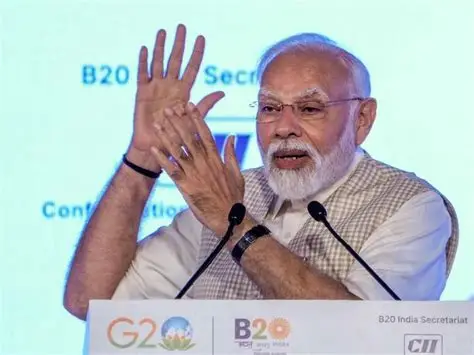
In recent international and domestic forums, including major AI summits and public addresses, PM Modi emphasized that AI must not remain a tool accessible only to a handful of corporations or advanced nations. Instead, he advocated for democratizing AI, creating ethical governance frameworks, and ensuring that artificial intelligence benefits all of humanity.
His remarks reflect India’s ambition to emerge not only as a technological powerhouse but also as a responsible global leader in shaping the future of AI.
Democratizing Artificial Intelligence
One of PM Modi’s central themes has been the democratization of AI. He argues that AI must be accessible, inclusive, and affordable rather than concentrated in a few powerful hands. According to his vision, technology should reduce inequality, not deepen it.
Democratization of AI involves:
- Making AI tools available to startups and small businesses
- Ensuring rural and underserved communities benefit from AI innovation
- Promoting open digital public infrastructure
- Encouraging multilingual AI systems to include diverse populations
India’s digital transformation journey, including large-scale digital identity systems, digital payments infrastructure, and e-governance platforms, provides a foundation for inclusive AI deployment. PM Modi has repeatedly highlighted how India’s digital public goods model can serve as a blueprint for other developing nations.
He emphasizes that AI should empower farmers with predictive weather analytics, assist students with personalized education tools, and enable doctors to diagnose diseases more efficiently. In this framework, AI becomes a force multiplier for development.
Human-Centric AI Development
Another key pillar of PM Modi’s statements is the concept of human-centric AI. He has stressed that technology must serve humanity rather than replace it. AI systems must augment human capabilities, not undermine dignity, creativity, or employment opportunities.
Human-centric AI prioritizes:
- Protection of human rights
- Data privacy and user consent
- Transparency in algorithmic decision-making
- Accountability in automated systems
PM Modi has called for global collaboration to establish guiding principles that ensure AI respects ethical boundaries. He has cautioned against unchecked deployment of AI systems that could lead to bias, discrimination, or misuse.
In his view, innovation must move hand in hand with responsibility.
Ethical Frameworks and Governance
AI governance remains one of the most debated global issues. PM Modi has advocated for a balanced regulatory approach—one that encourages innovation while protecting citizens.
He supports:
- International cooperation on AI standards
- Robust cybersecurity safeguards
- Clear accountability mechanisms for AI developers
- Transparent AI auditing processes
The Prime Minister has underscored that ethical AI governance must not become an obstacle to innovation. Instead, regulations should foster trust. Trust, he argues, is the foundation upon which sustainable technological ecosystems are built.
India’s approach seeks to avoid excessive restrictions while preventing misuse such as deepfakes, misinformation campaigns, and algorithmic bias.
AI for Global Good
PM Modi consistently frames AI not as a competition between nations but as a shared opportunity for humanity. He advocates using AI to address pressing global challenges such as climate change, poverty, food security, and healthcare access.
For example:
- AI-powered climate models can improve disaster prediction.
- Smart agriculture systems can increase crop yields sustainably.
- AI diagnostics can make healthcare accessible in remote regions.
- Language translation AI can bridge communication barriers.
He believes that collaboration among nations—rather than technological isolationism—will ensure AI benefits are distributed equitably.
Addressing Risks and Challenges
Despite his optimism, PM Modi has acknowledged the risks associated with AI. These include job displacement, cyber threats, misinformation, and ethical dilemmas surrounding autonomous decision-making.
He has urged governments and industries to invest in:
- Reskilling and upskilling workers
- Strengthening digital literacy
- Enhancing cybersecurity infrastructure
- Promoting responsible AI research
According to his perspective, proactive preparation is key to minimizing disruptions.
AI and Employment
A recurring concern globally is AI’s impact on jobs. PM Modi’s position is that while AI may automate certain tasks, it will also create new industries and employment opportunities.
He emphasizes:
- Encouraging youth participation in AI research
- Supporting startups in AI-driven sectors
- Expanding technical education in data science and machine learning
India’s demographic dividend, combined with AI-driven innovation, can generate sustainable economic growth if managed effectively.
India’s Role in Global AI Leadership
India aspires to be both a developer and regulator of AI technology. PM Modi has stated that India’s vast talent pool, vibrant startup ecosystem, and digital infrastructure provide a unique opportunity to lead responsibly.
He advocates:
- Building indigenous AI capabilities
- Collaborating with global partners
- Exporting AI solutions tailored for developing economies
India’s emphasis on inclusivity differentiates its AI strategy from purely commercial or military-driven models seen elsewhere.
Global Collaboration and Multilateralism
PM Modi has called for international institutions to work together in shaping AI’s future. He believes that AI governance should be inclusive, giving voice to developing nations rather than being dominated by a few major powers.
Multilateral dialogue, shared research initiatives, and cooperative innovation platforms are central to his vision.
Conclusion
Prime Minister Narendra Modi’s statements on Artificial Intelligence reflect a balanced and strategic vision. He envisions AI as a transformative force that can drive economic growth, social inclusion, and global progress—provided it is governed responsibly.
From democratizing AI access to building ethical frameworks and ensuring AI benefits all of humanity, his message underscores the importance of aligning technological advancement with human values.
As the world navigates the complexities of AI evolution, India’s approach—rooted in inclusivity, responsibility, and collaboration—may play a defining role in shaping the global AI narrative for decades to come.