









India Mental Fitness Score 2026: New Civic Metric for Urban Well-Being
As India navigates rapid urbanization and digital transformation, a new idea is gaining traction among policymakers, urban planners, and mental health advocates: the concept of an India Mental Fitness Score 2026. This proposed civic metric aims to quantify the psychological well-being of urban populations using data-driven indicators, mobile analytics, and community health metrics.
Unlike traditional mental health surveys conducted periodically, a Mental Fitness Score would offer real-time insights into the emotional and psychological state of residents across cities. It could act as a powerful tool for policymakers, healthcare providers, and citizens alike.
What Is a Mental Fitness Score?
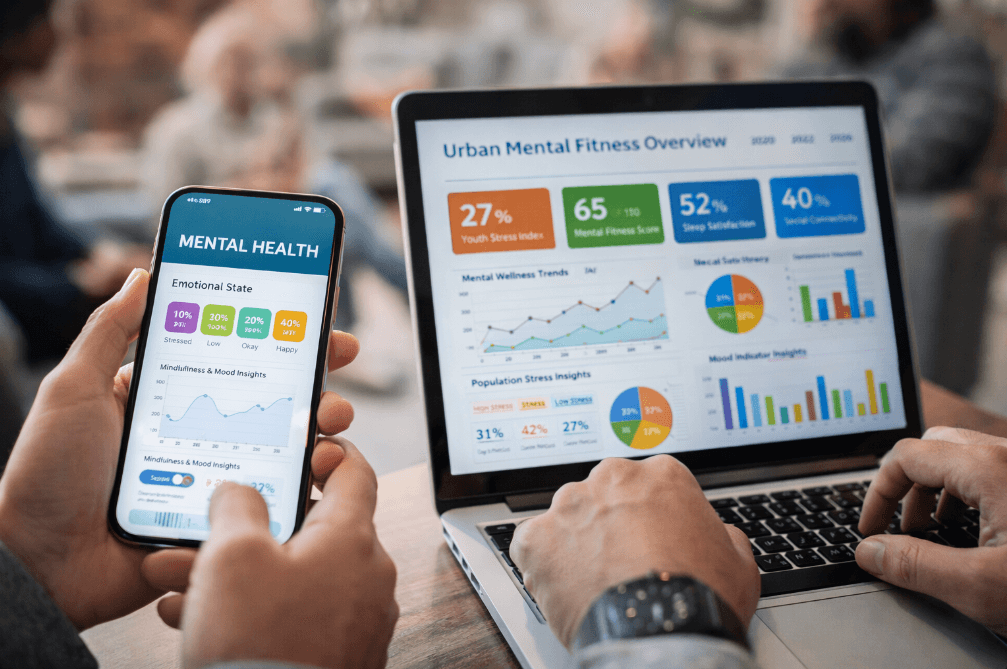
A Mental Fitness Score represents a composite measure of emotional well-being, stress levels, life satisfaction, and psychological resilience. It is developed using technology platforms that aggregate anonymized data from wellness apps, digital surveys, AI sentiment analysis, and community health platforms.
Key indicators might include:
- Stress index metrics
- Sleep quality patterns
- Self-reported mood scores
- Urban social connectivity indexes
- Coping and resilience ratings
By analyzing these components, cities could receive a dynamic Mental Fitness Score indicating the collective psychological climate of their populations.
Why 2026 Is Emerging as the Pivot Year
Several factors have converged to make 2026 a milestone year for this concept:
- Growth in mental health awareness among youth and working adults.
- Rapid adoption of digital wellness apps in India.
- Increased urban stress due to modern lifestyle demands.
- Policy emphasis on mental well-being under national health agendas.
With smartphone penetration exceeding 60% in urban centers and advanced AI tools for sentiment analysis, cities are uniquely positioned to adopt a data-centric mental well-being metric.
How the Mental Fitness Score Works
A typical implementation would involve partnerships between municipal health departments, digital health platforms, and academic institutions. Residents could opt in to share anonymized wellness data from apps or wearable devices, which is then processed to generate individual and community well-being scores.
AI engines might analyze:
- Daily mood inputs
- Sleep-to-stress correlations
- Coping mechanism patterns
- Social interaction data
The aggregated result would be a standardized score that reflects overall mental fitness, updated periodically to track trends and stress hotspots.
Direct Benefits for Urban Residents
The adoption of a Mental Fitness Score could have several direct advantages:
- Early identification of stress-prone neighborhoods
- Improved mental health services targeting
- Civic awareness campaigns based on data insights
- Customized wellness programs
- Employer wellness benchmarks
Instead of waiting for clinical diagnoses, community health departments could proactively launch programs in areas exhibiting low fitness scores.
The Technology Behind the Score
Advanced AI and machine learning play a critical role in transforming raw wellness data into actionable insights. Natural language processing (NLP) can decode emotional sentiment from user log entries, self-reported mood indicators, and social interaction metrics.
Data is aggregated in secure cloud systems, preserving privacy while enabling cross-city comparisons and trend analysis. These analytics could be visualized through dashboards accessible to citizens, policymakers, and nonprofit organizations.
Potential Impact on Employers and Workplaces
Urban workplaces could integrate the Mental Fitness Score into employee wellness programs, helping HR departments understand workforce stress patterns. This could lead to:
- Flexible work policies
- On-site counseling services
- Wellness incentive programs
- Mental health leave structures
With Indian tech hubs and corporate centers adopting progressive wellness frameworks, a community-wide score could harmonize corporate and civic well-being goals.
Privacy and Ethical Considerations
A major consideration is privacy. Since mental health is a sensitive field, the system must ensure data is fully anonymized, secured, and only used for positive interventions. Clear legislative frameworks and citizen consent protocols would be essential components.
Experts suggest using opt-in models, strict encryption, and transparent reporting to maintain trust.
Comparisons With Global Well-Being Metrics
Some global indices, such as the World Happiness Report or OECD well-being metrics, provide broad insights into national levels of satisfaction. However, a concentrated city-level Mental Fitness Score is far more granular, enabling focused public health action.
If implemented, India could become a pioneer in urban psychological analytics, with cities learning from one another and adopting best practices in mental wellness governance.
Challenges to Implementation
Despite its promise, challenges remain:
- Diverse linguistic populations in urban India
- Digital literacy gaps among older adults
- Ensuring unbiased AI analytics
- Balancing anonymity with actionable insights
Addressing these issues would require multi-stakeholder collaboration and continuous refinement of data models.
Early Pilot Initiatives in Indian Cities
Several urban centers are exploring digital well-being dashboards. Bengaluru’s civic tech initiatives, Pune’s wellness campaigns, and Delhi’s youth mental health outreach programs are laying the groundwork for data-informed public health frameworks.
These efforts create fertile ground for a structured Mental Fitness Score to emerge as a real civic instrument by 2026.
The Role of Educational Institutions
Universities and colleges can benefit from Mental Fitness Scores by monitoring student well-being trends. Campus counseling services, stress management workshops, and peer support networks could be guided by data insights, improving overall academic outcomes.
Future Outlook: Beyond 2026
Looking ahead, the Mental Fitness Score may become an integrated part of urban governance. It could link to public policy decisions, economic productivity analysis, and long-term city planning strategies centered on human well-being.
As digital health ecosystems mature, India’s approach may inspire other developing countries to adopt similar metrics, ultimately expanding the concept of civic well-being measurement globally.
Final Insight
The concept of an India Mental Fitness Score 2026 represents a bold reimagining of how cities understand and support psychological well-being. By harnessing digital tools, AI analytics, and community participation, India could pioneer a new form of civic metric — one that places mental wellness at the heart of urban progress.
Could India redefine urban well-being with a Mental Fitness Score by 2026? Share your thoughts below.