









India Water Credit Score 2026: The Silent Resource Ranking System Emerging in Smart Cities
India’s rapid urbanization has placed enormous pressure on water resources. While discussions often focus on climate change and infrastructure expansion, a quieter concept is beginning to surface in policy and smart city conversations — the idea of a “Water Credit Score.”
The India Water Credit Score 2026 is not yet an official nationwide policy, but urban planners and digital governance experts are increasingly discussing structured systems that monitor, rate, and optimize household and commercial water usage.
What Is a Water Credit Score?
A Water Credit Score refers to a data-driven rating mechanism that evaluates how efficiently households, residential complexes, and commercial buildings use water. Similar to how credit scores track financial responsibility, this model would measure resource responsibility.
The concept revolves around three pillars:
- Consumption efficiency
- Rainwater harvesting compliance
- Wastewater recycling participation
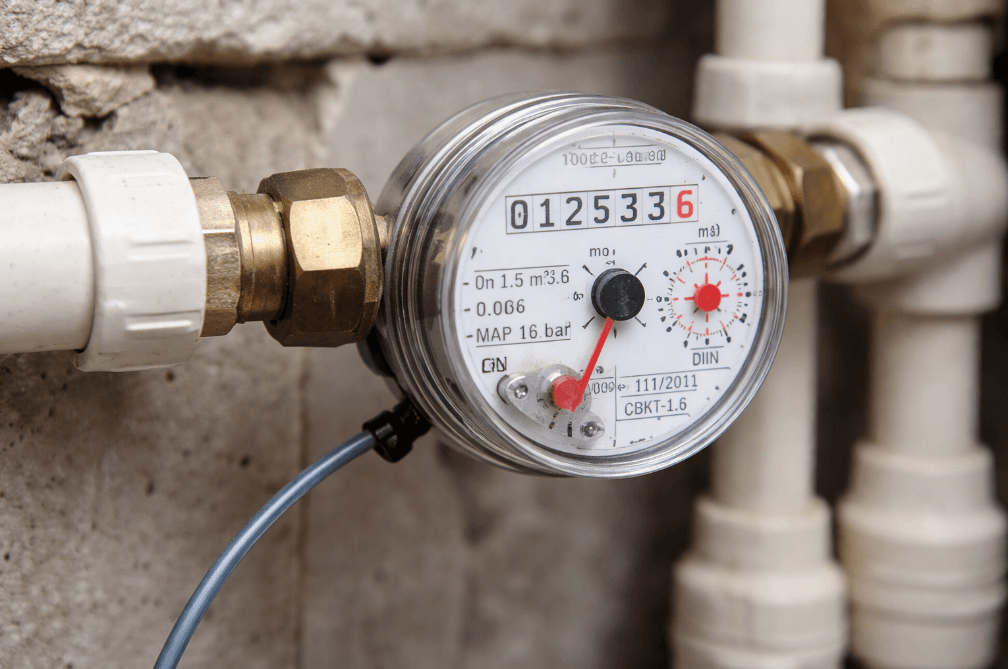
By combining IoT meters, municipal dashboards, and AI-based analytics, smart cities could generate behavioral resource insights.
Why 2026 Could Be a Turning Point
Several Indian cities are already deploying smart water meters and digital billing systems. By 2026, integrated data platforms may enable municipal bodies to analyze usage patterns at a granular level.
With growing water stress in cities like Bengaluru, Chennai, and Delhi, local administrations are exploring innovative governance frameworks that go beyond simple restrictions.
The shift is subtle but strategic: instead of imposing blanket bans, cities may incentivize responsible consumption through digital scoring systems.
How the System Might Work
Under a hypothetical implementation, every household connected to municipal supply could receive periodic water usage insights through a mobile app or civic portal.
Metrics could include:
- Daily per capita consumption comparison
- Neighborhood average benchmarks
- Seasonal efficiency ratings
- Rainwater harvesting compliance status
- Leak detection alerts
Over time, this data could evolve into a standardized “Water Behavior Index.”
Incentives Instead of Penalties
Unlike punitive rationing, a water credit score model could encourage positive reinforcement. High-efficiency households might receive:
- Reduced water tariffs
- Property tax rebates
- Priority access during limited supply cycles
- Green certification recognition
This approach aligns with India’s broader digital governance trend — nudging behavioral change through transparency rather than enforcement alone.
Technology Behind the Framework
India’s smart city infrastructure already includes IoT-enabled meters in pilot zones. AI analytics platforms can process large-scale usage data and detect anomalies such as leakages or abnormal spikes.
Cloud-based dashboards allow municipal officers to monitor supply-demand balance in real time.
By 2026, deeper integration between urban data platforms and sustainability metrics could make structured scoring feasible.
Impact on Real Estate and Urban Planning
If implemented, a Water Credit Score could influence property valuation trends. Residential complexes with efficient water systems and recycling plants might gain higher sustainability ratings.
Developers could begin marketing projects based on “Water Positive Living” benchmarks.
This would add a new dimension to India’s green building movement.
Rural and Tier-2 Implications
While the system would likely debut in metro cities, Tier-2 urban centers facing groundwater depletion could adopt simplified versions.
Digital dashboards for panchayats and small municipalities may enable transparent tracking of local water usage.
Such systems could strengthen decentralized resource governance.
Privacy and Ethical Considerations
As with any scoring model, transparency and privacy safeguards would be critical. Citizens may raise concerns about data monitoring and usage profiling.
Clear regulatory frameworks would be required to ensure that water behavior data remains secure and is used only for civic sustainability purposes.
Global Context
Globally, cities are experimenting with digital sustainability dashboards. However, a formalized water credit scoring mechanism remains relatively unexplored at scale.
If India pioneers a structured model, it could become a global reference point in urban resource management.
The Bigger Picture: Resource Accountability Economy
The idea of scoring resource usage reflects a broader shift in governance thinking. As climate stress intensifies, governments may move toward measurable accountability frameworks for electricity, water, and waste.
India’s digital public infrastructure strength positions it uniquely to experiment with such models.
Conclusion
The India Water Credit Score 2026 may still be an emerging concept, but its underlying philosophy signals where urban governance could be headed.
By combining smart meters, AI analytics, and citizen engagement, Indian cities may transition from reactive crisis management to proactive sustainability planning.
If executed responsibly, such a framework could transform how India balances growth with resource conservation in the coming decade.
Could water responsibility become the next measurable civic metric in India? The coming years may provide the answer.